Explore by topic

Water in Circular Economy and Resilience in Lingyuan City, China
Last updated: Jan 17, 2025
Summary
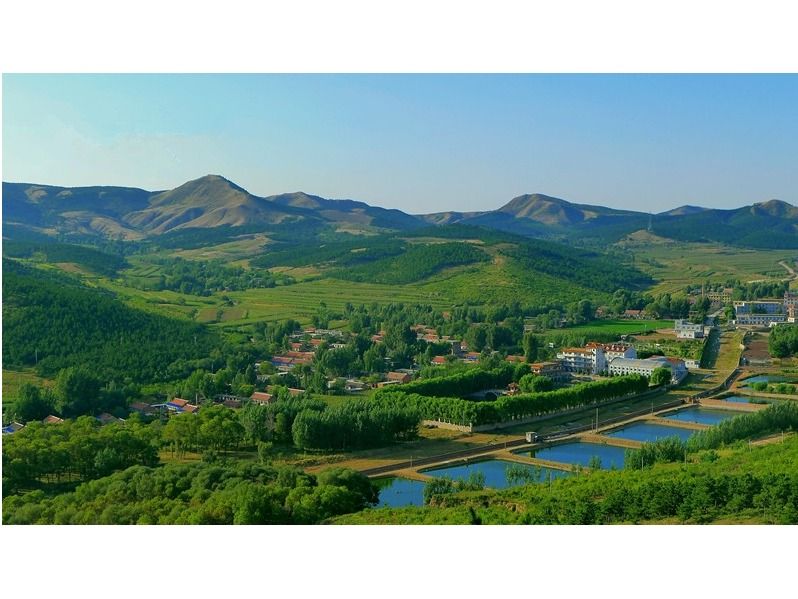
The municipality of Lingyuan started a project to increase wastewater collection and treatment and foster wastewater reuse. Reclaiming wastewater may be a useful alternative to conventional water resources, especially where there is water scarcity. Lingyuan City offers an example to many other cities looking for green and sustainable solutions to water scarcity.
Problem
Lingyuan City in Liaoning Province, China, is a county-level city with a population of around 650,000 people who have been facing acute water scarcity. The limited availability of surface water, combined with pollution of the Daling River which flows through the city, has led to the overexploitation of groundwater resources. Groundwater serves as a vital water supply source for the city (around 85 percent of total water use). Under new regulations enacted by Lingyuan City government, the establishment of any new business projected to consume large volumes of water must be justified. Water scarcity has thus become a major constraint on the city’s economic development.
Solution
To meet the increasing water demand resulting from rapid economic development and urbanization, the Lingyuan City government identified wastewater collection, treatment, and reuse as an opportunity to address the city’s water scarcity problem while promoting circular economy principles.
Aiming to improving wastewater collection and treatment and fostering wastewater reuse, the municipality of Lingyuan performed by:
(1) establishing separate drainage systems for stormwater and wastewater,
(2) extending networks to increase the amount of wastewater collected and population served,
(3) creationand later upgrade of a wastewater treatment plant (WWTP) into a tertiary treatment plant to improve the effluent quality of the reclaimed wastewater, and
(4) enhancing pumping stations for reclaimed water.
Outcome
By the completion of the Project in 2017, more than 90 percent of urban households were connected and daily wastewater collection and treatment reached between 50,000 and 58,000 m3 /day.
Currently, 30,000 m3 /day is further treated by the tertiary treatment processes to improve the effluent quality for reuse purposes.
20,000 m3 /day of that reclaimed wastewater is reused for the operation of six industries in the new industrial park and 10,000 m3 /day is used to replenish the urban lake in order to restore urban biodiversity and maintain the shallow aquifer around the lake.
The rest of the effluent, which is subjected to secondary treatment, is directly discharged into the Daling River downstream of the city, improving the river’s water quality.
Location
Industries
Key elements of the circular economy
Attachments and links
Contributors
Owner
Contributor
Contributor
Date added: Dec 9, 2021
Last updated: Jan 17, 2025
More from the contributors




Add your content
Strengthen the circular economy knowledge base by adding a report, case study, publication, or other resource to our platform!