Explore by topic

Empower uses blockchain to solve plastic waste issues
Last updated: Jan 22, 2025
Summary
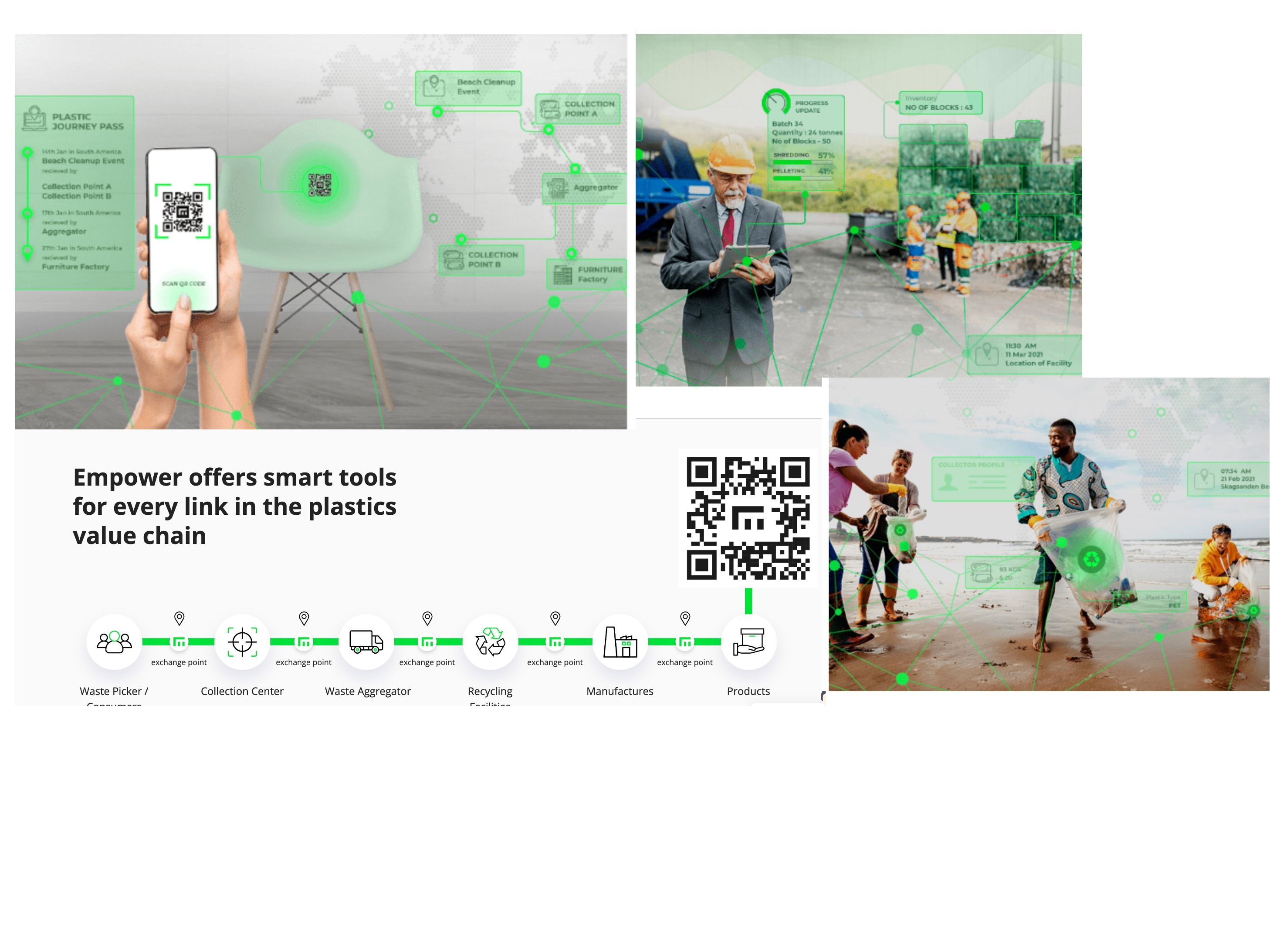
Empower uses blockchain technology to solve the plastic waste issue through a variety of mechanisms and smart tools across the plastic value chain - for example increasing the value of plastic waste through encouraging collectors, recyclers, brands and consumers to collect and recycle plastic waste in return for credits that can make encourage profitable recycling and increase equality for marginalized people in the global south.
Problem
Despite millions of tons of plastic going to waste each year, we have a distinct lack of quality recycled plastic stock on the global market. At the same time, it is difficult to track and follow plastic from production to waste – making transparency and responsibility in the plastic supply chain complicated.
Solution
Blockchain is developed as technological solution to create trust and transparency - to put an end to corruption and shady tactics behind the scenes: allowing plastic to be tracked from production to waste. From collecting plastic at the source through the sorting process to its eventual recycling and reintegration back into the supply chain - every step of the process is tracked using blockchain technology.
Norway's national plastic exchange system is incredibly efficient - 97% of all plastic bottles are recycled, while the average for comparison in the USA is around 30%. The premise in this country is simple: encourage people to recycle by giving them a small profit per bottle returned. Empower has expanded the idea behind Norway's plastic exchange scheme to a global scale by using blockchain technology. Blockchain enables the tracking and monetization of plastic. This allows Empower to make plastic collection and recycling profitable for some of the most marginalised people in the world.
Outcome
- Incentives to collect plastic, potentially improving the economic status of people across the globe.
- Making recycling and the use of recycled plastics smoother and easier because everyone knows where the plastic is located at all times.
- Blockchain technology cannot be hacked/modified making transparency higher).
- Tracking plastic from production to waste.
- Higher transparency and hence more (corporate) responsibility and accountability and henceforth potentially less corruption, plastic black market waste issues and eventually less plastic waste.
Location
Industries
Involved organisation(s)
Key elements of the circular economy
Contributors
Owner
Date added: Aug 9, 2022
Last updated: Jan 22, 2025
More from the contributors

Add your content
Strengthen the circular economy knowledge base by adding a report, case study, publication, or other resource to our platform!