Explore by topic

Phillacolor - natural dyes
Last updated: Jan 17, 2025
Summary
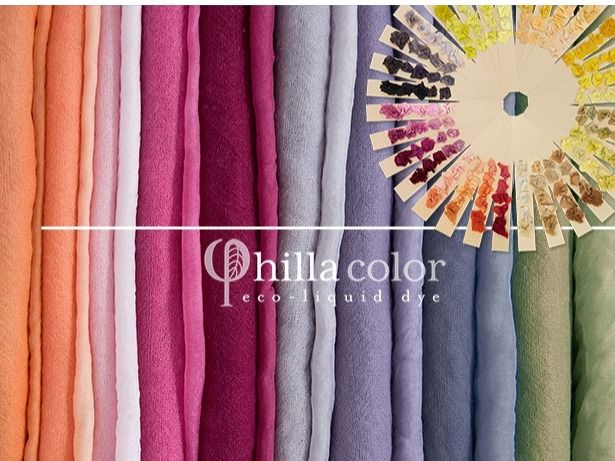
φhillacolor produces natural dyes for fabrics, concentrated liquid dyes, pre-extracted from natural sources. After dilution into a water solution in the right percentage, they can be used for dyeing fibers, yarns, fabrics and garments. They are prepared with 100% natural materials and they not contain any chemical substance.
Problem
The textile dyeing industry is one of the most chemically intensive industries on earth and the worst polluter of clean water after agriculture. The synthetic additives used in the dyeing and finishing process are dangerous to human health, marine life, and the environment. Contact with syntehtic dyed clothes cause allergic reactions, skin irritation, and rashes.
Solution
φhillacolor products are made from water of the local water supply and natural sources, leaves, roots, berries, bark, flowers and spices. The company uses vegetable sources of non protected plants, from local fields and forests collected in different seasons and other traditional dye plants from certified and qualitied supplies. Compared to the most common natural dyestuff (raw dyestuff, pigments, powdered extracts), which require a long dyeing process to extract the color, strain the liquid and controlling the dyebath, products are ready to use in order to save time and energy, and designed to easily manage the dyeing process, in order to reach a best color result. Natural dyes are derived from organic materials and are produced by natural process, which means that they don’t produce toxic waste, they create less waste water during the dyeing and rinsing process and they are safe for skin, some of them have anti-microbial activity. Skin is the human body’s largest organ, because it protects all the body. To preserve its health Φhillacolor products are consciously manufactured with pH similar to the skin pH, which is fairly acidic, in average from 4.2 e 5.6.
During the production process φhillacolor mainly uses natural raw materials, water and electricity. Because water is a precious resource, the company wants to reduce its waste. There is usually some residual color remaining in the exhaust dyebath, to avoid waste of water and color and maximize the process, the dyebath may be reused to dye materials with lighter shades or recharged with additional color. At the end of the production cycle, as the water contains organic residuals only, without oily or any toxic waste, the dyebath can be disposed of into sewers or as ideal fertilizer for use in agricultural field or to water the garden.
Location
Industries
Involved organisation(s)
Attachments and links
Contributors
Owner
Date added: Jan 18, 2023
Last updated: Jan 17, 2025
More from the contributors




Add your content
Strengthen the circular economy knowledge base by adding a report, case study, publication, or other resource to our platform!