Explore by topic

RAG Administration Building: Leveraging C2C Design and Material Passports
Last updated: Jan 29, 2025
Summary
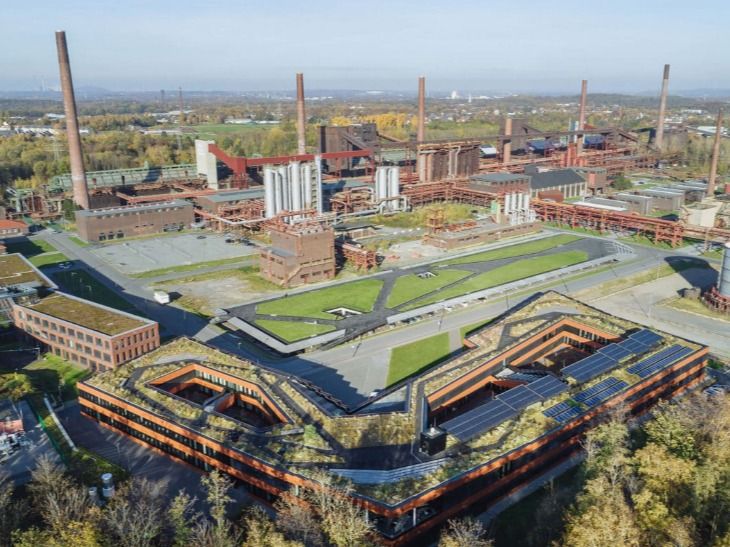
The RAG Foundation Administration’s new building exemplifies sustainable design through adherence to cradle-to-cradle (C2C) principles. This circular construction approach ensures that all materials retain value at the end of the building's lifecycle, enabling reuse, recycling, or reintegration into nature. The project revitalises a historically industrial area, blending cultural heritage with nature and sustainability.
Problem
Aligning the project with the site's cultural and environmental significance was challenging. This involved balancing industrial heritage with natural revitalisation, biodiversity support, and energy efficiency.
Solution
Materials were selected based on C2C principles, ensuring their reusability, recyclability, or ability to reintegrate into nature. Material passports documented every component, detailing its origin, composition, and instructions for future reuse. This ensured traceability and long-term value retention of materials, transforming the building into a temporary material bank. Regional materials were prioritised, reducing transportation impacts and supporting the local economy.
Modular partition walls and lightweight materials were installed to make indoor spaces flexible and adaptable, while adhesive bonding was replaced with mechanical connections, enabling easy disassembly.
A green roof compensated for soil sealing increased biodiversity with urban gardening and bat boxes and provided a rainwater retention area. Similarly, advanced insulation, dust-binding carpets, and green walls improved indoor air quality and comfort.
Renewable energy systems include photovoltaic installations and geothermal energy to maximise energy efficiency.
Finally, the design respected the site's industrial heritage while transforming it into a hub for art, culture, and recreation.
Outcome
Circular design minimised waste and transformed the building into a raw material repository. Material passports enhanced the transparency of resources, making them assets for future projects and setting a standard for regenerative construction.
Renewable energy systems and the green roof supported biodiversity and reduced environmental impact.
The building created a flexible, healthy workplace and welcoming public spaces, enhancing employee and visitor experiences. The green roof offered opportunities for recreation and connection with the natural landscape.
The area's transformation attracted over two million visitors annually, boosting the site's cultural and economic importance.
As one of Germany’s first C2C-designed buildings, the project demonstrated the feasibility and benefits of circular construction, inspiring architects, contractors, and policymakers to adopt similar principles.
Location
Industries
Involved organisation(s)
Key elements of the circular economy
Attachments and links
Contributors
Owner
Date added: Jan 28, 2025
Last updated: Jan 29, 2025
More from the contributors

Add your content
Strengthen the circular economy knowledge base by adding a report, case study, publication, or other resource to our platform!