Explore by topic

Ahluwalia's partnership with Avery Dennison to provide digital storytelling through QR codes
Last updated: Sep 3, 2021
Summary
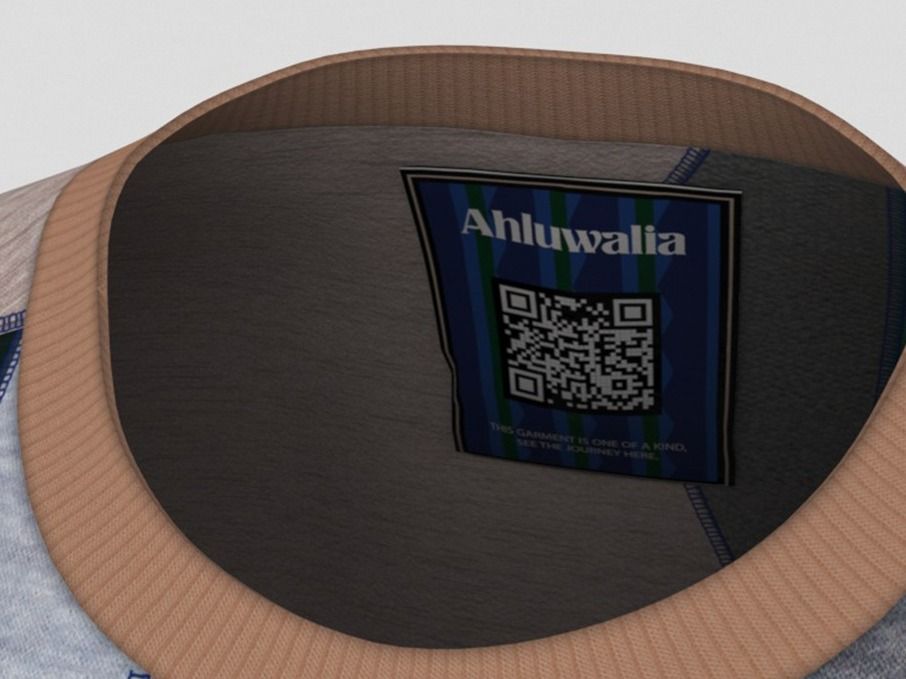
Ahluwalia partnered with Avery Dennison to pilot their QR code labelling system as part of Copenhagen Fashion Summit's 2020 online event (CFS+) for the Designer Challenge series. The QR code provides transparency and a means of storytelling, allowing consumers to connect the garment's past, present, and future within one label. Ahluwalia has incorporated smart labelling into the SS21 collection.
Problem
As part of the Copenhagen Fashion Summit 2020, Avery Dennison and Ahluwalia worked together on a "Designer Challenge", which used Avery Dennison's QR labelling system to provide deeper storytelling around Ahluwalia's SS'21 collection. Ahluwalia uses vintage and surplus stock, resulting in remade garments that are never quite identical. However, the rich history of these materials is difficult to effectively convey at the point of sale. The brand wanted a new method to extensively communicate these detailed stories behind the production. To further improve the sustainability of the collection, they also needed to provide advice and information to their customers on care (to prolong the life of a garment) and correct disposal (to keep garments as circular as possible) in a way that would be accessible throughout the garment lifecycle.
Solution
The label works with a QR code system, where the garment label includes a QR code that users can scan to access more information. The product produced by Ahluwalia used this QR label to identify and discuss the history of the materials, the processes involved in creating the garment, care directions and information around the future end of life options, including take-back schemes. The label links to Avery Dennison's system, where it's broken down into the three stages of 'past', 'present' and 'future'. The 'past' section allows users to delve into the story of the materials used and understand that they are using a waste stream rather than new materials as remade garments. It identifies the processes behind the production, showing how found materials become panels on new garments, making each unique and conveying this as a positive idea. 'Present' promotes longevity of use, describing how to care for the materials and best washing and drying practices. In 'future', it promotes returning to Ahluwalia to be remade, and the designer, Priya, explains how the panels could be transformed into a new garment.
Outcome
QR codes provide increased transparency and connectivity across the value chain. They allow designers to tell more complex stories about the material origins and provide insight into the production process. They can also provide information about care and end-of-life in a way that is still accessible after long-term wear. This project highlights the value of QR codes for brands that use found materials and communicate the more complex sourcing and production processes involved and the unique nature of remanufactured fashion products.
Location
Industries
Involved organisation(s)
Key elements of the circular economy
Attachments and links
Contributors
Owner
Contributor
Date added: Aug 5, 2021
Last updated: Sep 3, 2021
More from the contributors


Add your content
Strengthen the circular economy knowledge base by adding a report, case study, publication, or other resource to our platform!