Explore by topic

Fab.BRICK - from textile waste to raw material
Last updated: Aug 13, 2021
Summary
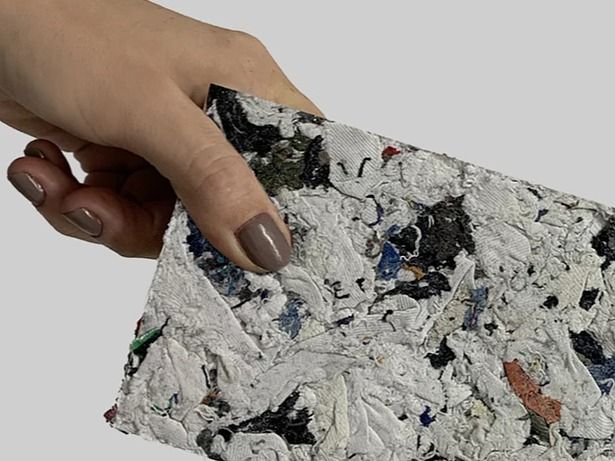
Fab.BRICK is an innovation from French architect Clarisse Merlet, who began to look at using waste materials in architectural design and the construction sector, rather than virgin raw material. She explored using plastic bottles, cardboard, and other waste items, but eventually decided to delve further into textiles, since this sector also contributes to global pollution. She used the natural properties of the textile waste- thermal and acoustic insulation- to develop the material into a useable textile bricks.
Problem
There are around 4 millions tons of textile waste in Europe every year, and only 32.5% of clothes in the French market are gathered by recycling agencies annually. The remainder of this waste ends up in landfills, filling them up and also wasting the raw materials that could be reused or repurposed.
Solution
Fab.BRICK developed machines that can create bricks out of discarded clothes. Around three discarded t-shirts can be fused together by bio-ecological glue to form a 400 g brick. Textiles and clothing can be easily used in the bricks without requiring much mechanical or material breakdown or augmentation first. This makes it a labor and cost-efficient means of upcycling material.
These bricks are now used by retail brands as partition walls in their shops, decoration for the stock shelves, art pieces or as the base for lamps and chairs.
This innovation is helping to keep clothing waste in circulation and out of landfills, and is utilizing existing material qualities in a new sector and for a novel application.
Outcome
Since the first prototype machine in 2017 creation, Fab.BRICK has produced 40,000 bricks, thus recycling 12 tons of textiles.
Location
Involved organisation(s)
Attachments and links
Contributors
Owner
Contributor
Date added: Aug 12, 2021
Last updated: Aug 13, 2021
More from the contributors


Add your content
Strengthen the circular economy knowledge base by adding a report, case study, publication, or other resource to our platform!