Explore by topic

Applying circular principles to mining in Oman
Last updated: Apr 29, 2026
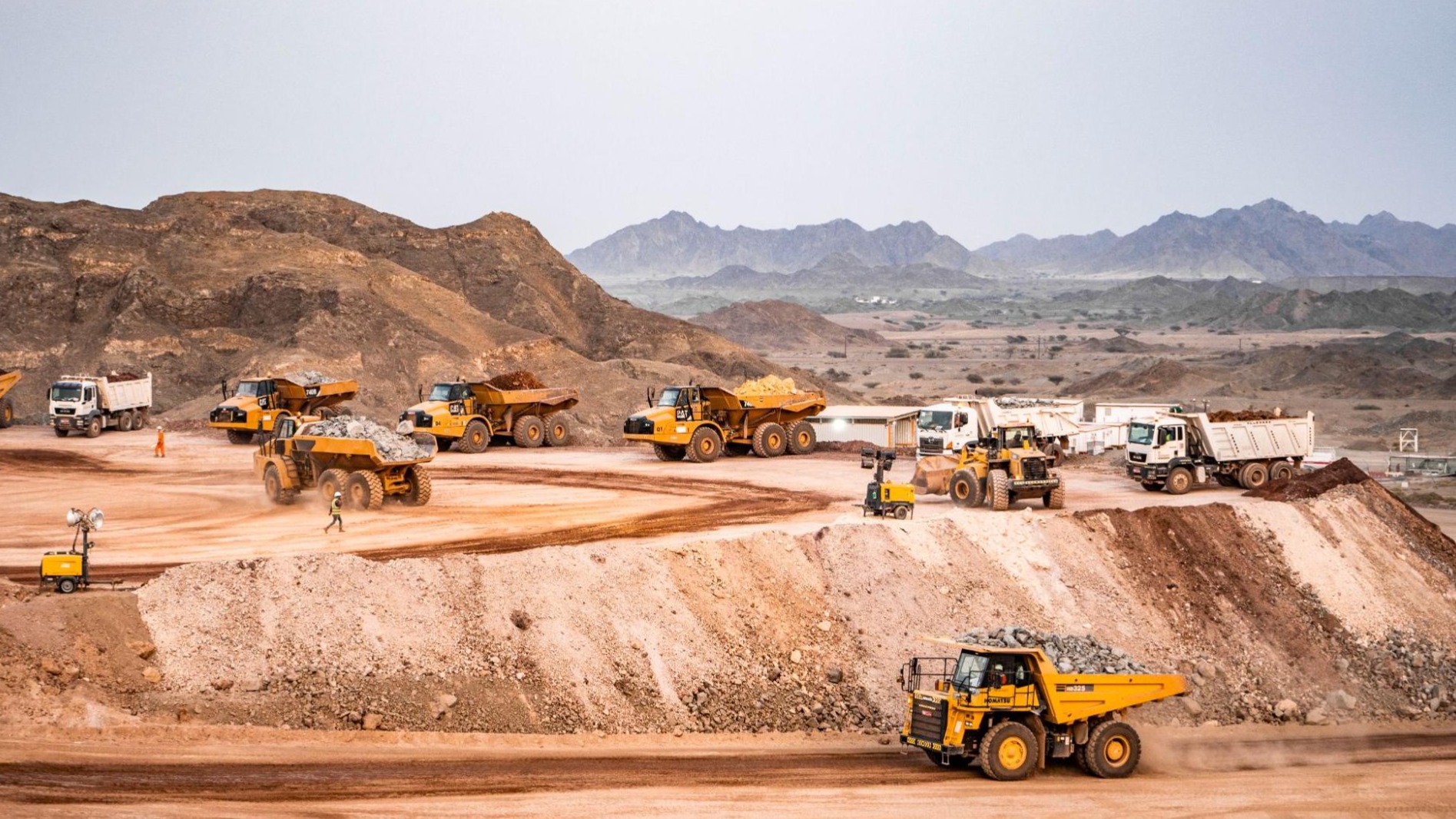
Photo from the Minerals Development Oman Website
Summary
Oman is embedding circular principles into its mining sector to enhance resource efficiency, reduce waste, and add value. A leading example is the Suhar facility, which valorises copper tailings by converting them into high-purity copper cathodes using renewable energy and a closed-loop water system. This demonstrates how circular principles can be applied to extractive industries to reduce raw material extraction and turn waste and by-products into value, minimising some negative impacts.
Problem
Mining is inherently extractive and resource-intensive, with additional negative externalities including ecosystem damage, worker hazards, and pollution. The sector continues to involve significant occupational risks and informal practices, alongside broader environmental and social impacts. For a successful circular economy transition, mining must go beyond extraction to integrate resource efficiency, local processing, recycling, and reuse.
In Oman, adopting circular practices faces multiple challenges. Policy frameworks are evolving, with the formalisation of secondary raw material markets led by Oman Metal Trading (OMT) and regulatory guidance from the Ministry of Energy and Minerals. Economically, low-grade by-products are often costly to process and store, while the distance between extraction sites and industrial hubs raises operational expenses. Water scarcity, energy demand, and environmental impacts further constrain operations, making efficient resource use and waste minimisation essential. Additional hurdles include integrating downstream processing, maintaining quality standards, and building technical expertise to ensure that mining contributes sustainably to Oman’s economic diversification.
Solution
While mining is inherently extractive and cannot be fully circular, minerals remain essential for human wellbeing and the global energy transition, and secondary sources alone cannot meet demand. Circular principles can, however, make mining more resource-efficient, lower-impact, and economically resilient. Applying circularity involves reducing waste, recovering value from by-products, extending the life of materials and equipment, and planning operations—including closure—to minimise environmental and social impacts. Examples include reusing tailings and slags, urban mining, resource recovery, resource-as-a-service models, automation for efficiency and worker safety, improving water efficiency and reuse, strengthening tailings management, re-mining legacy waste, and designing for circularity.
Oman’s mining sector is shifting from traditional extraction toward extracting value from waste and by-products, supporting industrial development and aligning with Vision 2040 and its economic diversification program. Although mining contributes only around 0.5% of Oman’s GDP, it plays a crucial role in industrial activity and infrastructure, with Oman being one of the world’s largest gypsum exporters. Circular practices are emerging, treating by-products, waste rock, and process water as inputs for other processes. The Suhar facility exemplifies this approach, converting copper tailings into high-purity copper cathodes using renewable electricity and closed-loop water systems, starting at 60 tonnes per year with potential to scale to 12,000 tonnes and turning historical waste into valuable feedstock for renewable energy and industry.
In addition, Oman is developing a domestic circular ecosystem across mining and associated supply chains. The Al Thail Group operates a lead-acid battery recycling plant refining around 10,000 tonnes per year under advanced environmental controls, while Starsun Sohar is establishing a facility for lead-acid battery recycling. These initiatives enable the reuse of critical metals and materials domestically, reduce dependence on raw imports, and integrate environmental safeguards into industrial operations. Technological adoption, including automation and AI, is being promoted to improve operational efficiency, workforce training, and regulatory compliance. Government-led initiatives, exploration agreements, and industrial partnerships are designed to integrate ESG standards, recycling, and quality assurance throughout the mining value chain, anchoring domestic processing and creating a more resilient and circular sector.
Outcome
The application of circular principles in Omani mining has enabled the conversion of waste into economically valuable resources while reducing environmental impacts. The Suhar copper tailings facility has established a domestic supply of high-purity cathode copper and plans to expand production significantly in 2026. Lead-acid battery recycling initiatives are creating domestic loops for critical materials with potential exports to international markets. These initiatives illustrate how resource efficiency, technological adoption, and industrial symbiosis in the mining sector can make extractive activities more resource efficient. By valorising waste, embedding renewable energy and water recycling, and developing downstream processing capabilities, Oman is positioning its mining sector as a model for more circular industrial development in the region.\
Sources include links added, and Circle Economy. (2026). The circularity gap report Oman. Amsterdam: Circle Economy.
Location
Industries
Involved organisation(s)
Key elements of the circular economy
Attachments and links
Contributors
Owner
Date added: Apr 29, 2026
Last updated: Apr 29, 2026
More from Circle Economy

Add your content
Strengthen the circular economy knowledge base by adding a report, case study, publication, or other resource to our platform!