Explore by topic

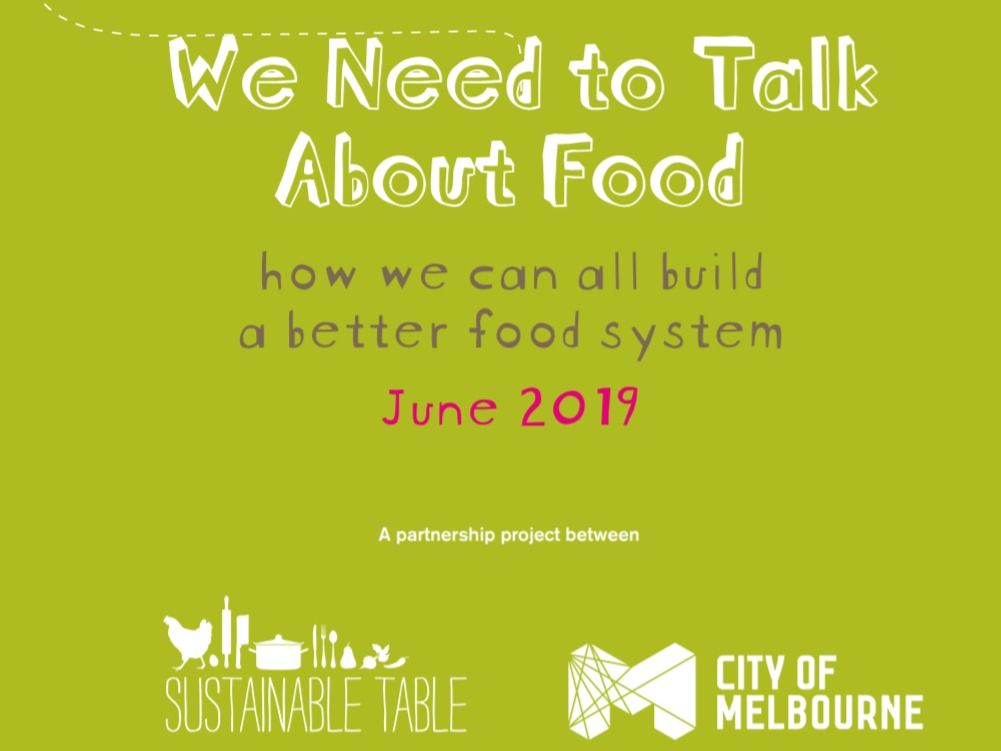
Melbourne Collaborates on "We Need to Talk About Food" Guide
Last updated: May 23, 2022
Summary
Melbourne partnered with a local nonprofit to create the We Need to Talk About Food guide on sustainable food consumption - a collaboration between the City of Melbourne and environmental not-for-profit Sustainable Table – developed for residents, businesses, and those who work in or are visitors to the City of Melbourne. The guide has been developed to provide information and practical resources to educate readers about food system challenges and the opportunities we are presented with each day to engage in positive action to support a resilient, local food system.
Problem
Food has a significant impact on the environment. Every step of the food supply chain, from production to transport, processing, packaging, and distribution, has potential environmental consequences. The impacts include scarce resources, biodiversity loss, waste generation, land degradation, pollution of waterways, and greenhouse gas emissions. The EPA determined that food makes up around 30% of our eco-footprint in Victoria – more than our transport and home energy use combined.
Solution
The City of Melbourne has a vision of a food system that is secure, healthy, sustainable, thriving, and socially inclusive. A key theme in our Food Policy is to ensure that the food we produce and consume improves our environment, regenerates our natural resource base, and promotes sustainable and fair food practices.
We all have a role in creating a more sustainable and secure food system. While there is not a ‘silver bullet’ that will solve all the environmental issues of our food system at once, there are several actions our community can take to drive change in specific areas. We have created this guide to introduce some of the impacts and the knowledge to prioritise the actions most important to all of us.
Working together with businesses, organisations, governments, and individuals, we can create a better food system for Melbourne.
Outcome
The environmental impacts of our food system are varied and with many different causes. By understanding what the impacts are and prioritising those you care most about, you can start taking actions that will improve the sustainability and resilience of our food system. Choosing what you eat, where you shop, and what you spend your money on is a powerful way to drive sustainable change in our food system. A few simple, but effective, actions include eating food that is in season, sourcing food locally, growing your own, • reduce packaging waste, reducing food waste, and starting a compost bin.
Location
Industries
Involved organisation(s)
Attachments and links
Contributors
Owner
Contributor
Contributor
Date added: Aug 19, 2021
Last updated: May 23, 2022
More from the contributors





Add your content
Strengthen the circular economy knowledge base by adding a report, case study, publication, or other resource to our platform!