Explore by topic

The Brazilian sneaker brand Cariuma has been implementing alternative strategies to reduce the carbon footprint of its production chain
Last updated: Dec 28, 2023
Summary
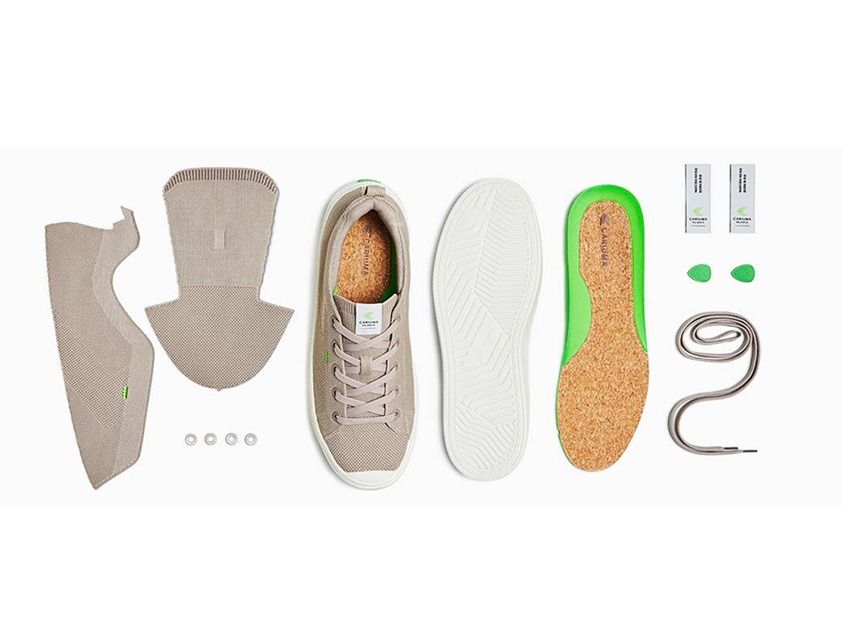
An example of a brand that is considering introducing sustainable practices into its production chain is Cariuma. Founded in 2018, the Brazilian brand from Rio de Janeiro has been implementing design-thinking strategies to design timeless and green sneakers. The choice of materials plays an important role in designing high-quality and low-impact sneakers. Using certified materials of natural origin and optimising offcuts from production processes are some of the strategies developed by the company.
Problem
More than 23 billion pairs of shoes are made every year and, when it comes to the sneaker industry, its production is exceptionally carbon intensive, accounting for 1.4% of global greenhouse gas emissions. A typical pair of running shoes generates approximately 13.6 kilograms of CO₂ emissions and, according to a study conducted by MIT, most of the carbon footprint comes from manufacturing processes. Implementing carbon emission reduction strategies is critical to the sustainable growth of this industry.
Solution
The leftover natural rubber used in the production of outsoles is recycled and reused for the production of the next pairs. Another innovation is the addition of natural mamona oil to the insole production, significantly reducing the use of virgin plastics and increasing the natural content of its products.
Reducing energy consumption by optimizing the manufacturing steps is also one of the company's goals. To achieve this goal, the brand has developed a technique for making shoes with only a 3-piece upper and 1-piece outsole with only a few stitch points.
Outcome
Overall, 435 of Cariuma products are 100% vegan and the brand is committed to increase to over 50% by 2021.
Location
Industries
Involved organisation(s)
Key elements of the circular economy
Attachments and links
Contributors
Owner
Contributor
Contributor
Date added: Aug 25, 2021
Last updated: Dec 28, 2023
More from the contributors




Add your content
Strengthen the circular economy knowledge base by adding a report, case study, publication, or other resource to our platform!