Explore by topic

Ethel Studio: Making Zero Waste Meditation Cushions Using Pre-consumer Textile Waste
Last updated: Sep 29, 2021
Summary
Pre-consumer textile waste poses a major concern: raw materials that goes into the production of the textile were extracted for nothing, not to mention the possibilities of any negative externalities that go along during the production stages. Ethel Studio collects pre-consumer textile scraps from its local community, sorts them, and sews and pieces them into meditation cushions. With its collection of meditation cushions, it hopes to promote environmental justice, localisation and transparency, uniqueness, economic justice, and a slow approach to work within the industry through its purpose-driven approach to operation.
Problem
Pre-consumer textile waste refers to any waste material produced before the textile pieces even reach the consumer. This includes fabric leftover after cutting out a pattern, those resulted from overstocking, defective printing, dying and finishing for instance. As a result of the natural shapes that make up a garment, approximately 10-30% of the fabric is cut away and discarded during the cutting process, destined for landfill or incineration. Pre-consumer textile waste has its major concern: When they are disposed to the landfill before even making themselves to the consumers, it means that all the raw materials that were extracted for the production of them go to nothing, not to mention any negative externalities (e.g. water pollution as a result of dye effluent discharged) that goes along during the production stages.
Solution
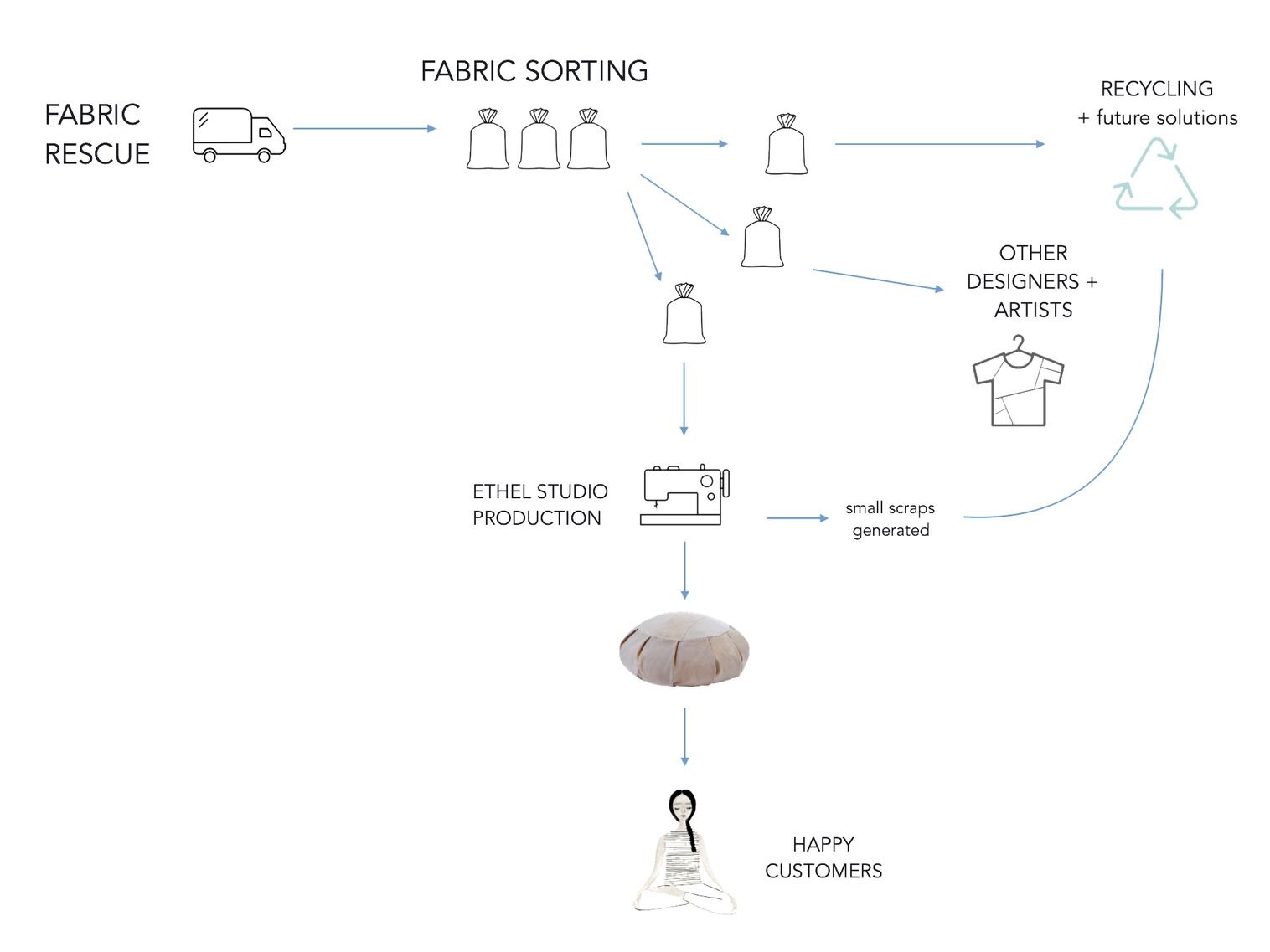
The Founder of Ethel Studio, Maggie Dimmick, aspires to create products with longevity and purpose. Seeking her meditation practice for inspiration, Ethel Studio produces meditation cushions using pre-consumer textile waste. It rescues 'wasted' fabrics from local designers, fashion company offices and production facilities in the Twin Cities area, sorts them, cuts and pieces the fabrics together, and sews and transforms them into meditation cushions. Its sewing procedures are a collaboration between its studio in Saint Paul and contract stitchers nearby.
Outcome
With Ethel Studio, Maggie hopes to promote environmental justice and circularity: by rescuing fabric scraps that would have otherwise go to the landfill or incinerators in an otherwise linear system. By sourcing from the local manufacturing community, it also promotes localisation and transparency and reduces any potential transportation impacts from long supply chains. As Ethel Studio works with fabric waste from various sources, no two of its meditation cushions are identical, adding on to the unique appearance of the brand. Another outcome of Ethel Studio's business model is its slow mode of operation. It works against the fashion fashion industry and aspires to seek slowness in its work amid the underlying 'capitalist systems' , embracing any fabric 'imperfections' and placing material efficiency above time and monetary efficiency.
Location
Industries
Involved organisation(s)
Key elements of the circular economy
Attachments and links
Contributors
Owner
Date added: Sep 17, 2021
Last updated: Sep 29, 2021
More from the contributors


Add your content
Strengthen the circular economy knowledge base by adding a report, case study, publication, or other resource to our platform!