Explore by topic

Making the invisible visible: Towards a just circular transition for Bangladesh's Jhut workers
Last updated: Mar 11, 2026
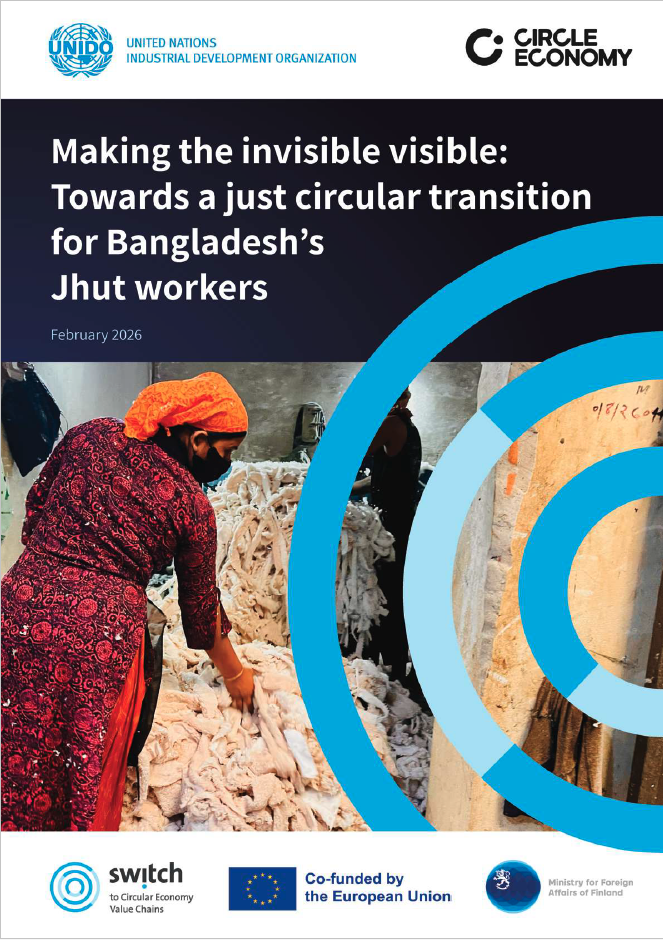
Bangladesh’s textile industry has transformed into a global export powerhouse, employing millions but facing growing social, economic, and regulatory pressures. As the country navigates evolving due diligence and circularity requirements, the need for a just and inclusive transition that safeguards people working across the industry has never been greater. This publication explores the often-overlooked post-industrial textile waste (jhut) sector, examining its role in industry-wide circular activity and its implications for employment and decent work. Through internationally applicable methodologies and field research, the study offers evidence-based insights and practical recommendations for policy and governance, as well as brands and buyers, to ensure that scaling circularity in the industry supports both Bangladesh's sustainability ambitions and workers’ rights.
Download the full report to learn more.
Authors: Saoirse Walsh (Circle Economy); Kumar Prashant (Circle Economy); Esther Goodwin Brown (Circle Economy); Dr Mohammad Abbas Uddin Shiyak (Bangladesh University of Textiles); Azad Abul Kalam (Bangladesh University of Textiles); Md. Sakib Al Montasir (Reed Consultancy); Aminur Rashid-Repon Chowdhury (Labour at Informal Economy Society); Farida Khanam (Labour at Informal Economy Society); Pikanul Hassan Nayem (Labour at Informal Economy Society).
Attachments and links
Contributors
Owner
Date added: Mar 11, 2026
Last updated: Mar 11, 2026
Add your content
Strengthen the circular economy knowledge base by adding a report, case study, publication, or other resource to our platform!