Explore by topic

Shared mobility in a car-dependent system: vanpooling and shared taxis in Oman
Last updated: Apr 29, 2026
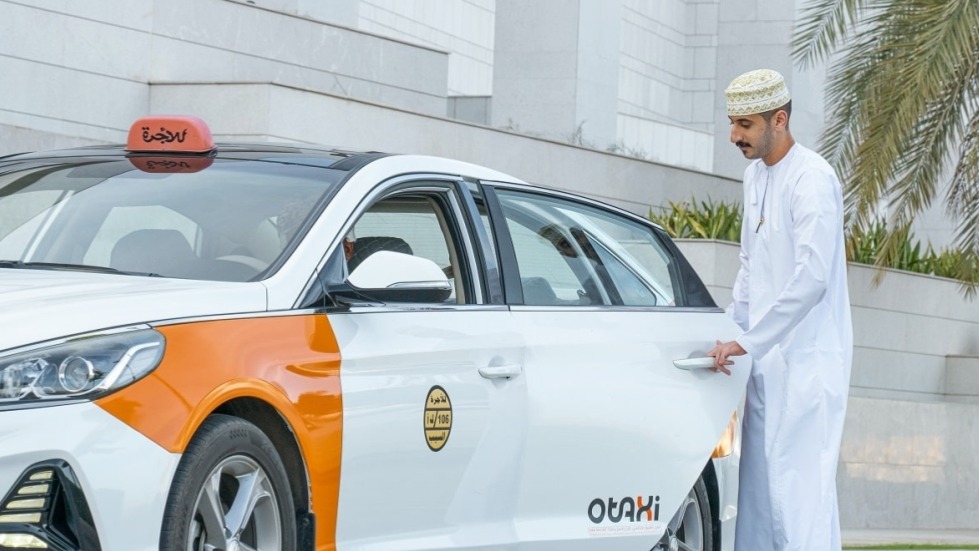
Photo from an article by Vinod Nair, Oman Daily Observer
Summary
Oman’s transport system is car dependent, driven by geographic scale, dispersed settlement patterns, limited public transport coverage, and harsh climate conditions. However, shared mobility practices, such as vanpooling, shared minibuses, and collective taxi use, are already embedded in everyday mobility, especially for commuting and intercity travel. While not explicitly labelled as circular, these practices increase vehicle occupancy, reduce per-capita emissions, and decrease car ownership.
Problem
Mobility is essential for access to employment, services, and social participation, yet it is also a major contributor to emissions and material use through private vehicle ownership. In Oman, personal transport (and household emissions) accounts for a substantial share of carbon emissions, reflecting a strong reliance on private cars. Car dependency is reinforced by two structural factors. First, Oman’s vast geography and low population density make private vehicles the most practical option for many journeys, particularly outside urban centres. Second, extreme heat limits the feasibility of active mobility such as walking and cycling for much of the year. As a result, the majority of residents use cars daily, while public transport and active mobility options remain limited.
Solution
Circular mobility in the Omani context hinges on reducing private car ownership, improving vehicle utilisation, and expanding shared and public transport options, alongside developing urban mobility systems that better support circular mobility. While formal public transport is expanding, its modal share remains modest. Achieving lower emissions and reduced congestion will therefore require greater reliance on shared mobility solutions that make more efficient use of existing vehicles. Shared mobility already exists in Oman through a mix of formal, semi-formal, and informal systems, which increase occupancy rates and reduce per-capita transport impacts.
The most widespread are shared vans and minibuses (so called Baisa buses), which carry up to 15 passengers and provide the lowest-cost intra-urban transport, particularly used by low-wage expatriate workers. Operating on flexible routes and organised informally via social networks and messaging platforms, they function as daily vanpooling systems. Shared taxis are another long-standing model, operating in both urban and intercity contexts, where passengers travelling in the same direction share a car at a fixed fare. This system offers a practical alternative on routes with limited bus services and allows flexible occupancy, as passengers heading to the same destination can either share rides or pay the full fare for private travel. More recently, shared mobility has expanded through the formalisation and digitalisation of taxi services. Regulated ride-hailing platforms such as Otaxi, in partnership with Yango, use app-based dispatch, metered fares, and fleet management to modernise services and pool demand, reducing reliance on private car ownership.
Policy developments are reinforcing this shift. From April 2025, all regular taxis operating in public spaces must register with licensed ride-hailing applications, enabling service standardisation and data reporting. Muscat Municipality has also promoted carpooling to reduce congestion, emissions, parking demand, and transport costs.
Outcome
These shared mobility practices collectively contribute to increased vehicle occupancy and reduced per-capita transport emissions in a system otherwise dominated by private cars. Taxis account for over 28,000 registered vehicles (around 1.6% of all registered vehicles) and operate in near-continuous circulation, serving multiple passengers daily. Public transport is also gaining acceptance, with the national operator carrying more than 4.7 million passengers in 2024, alongside continued expansion of bus routes and stations.
While carpooling and shared taxis have declined in some areas due to the growth of app-based ride services and bus networks, shared vans, collective taxis, and ride-hailing platforms remain critical mobility solutions, particularly for lower-income groups and intercity travel. Together, these systems demonstrate that circular mobility practices already exist in Oman, even within a car-dependent context. Scaling and formalising these models, through regulation, digital platforms, and integration with public transport, offers a realistic pathway to reducing car ownership, congestion, and emissions while maintaining access and affordability.
Sources include links added, and Circle Economy. (2026). The circularity gap report Oman. Amsterdam: Circle Economy.
Location
Industries
Involved organisation(s)
Key elements of the circular economy
Attachments and links
Contributors
Owner
Date added: Apr 29, 2026
Last updated: Apr 29, 2026




Add your content
Strengthen the circular economy knowledge base by adding a report, case study, publication, or other resource to our platform!