Explore by topic

Regenerative Resources Co - Agroforestry, Halophytic agriculture
Last updated: Jul 11, 2022
Summary
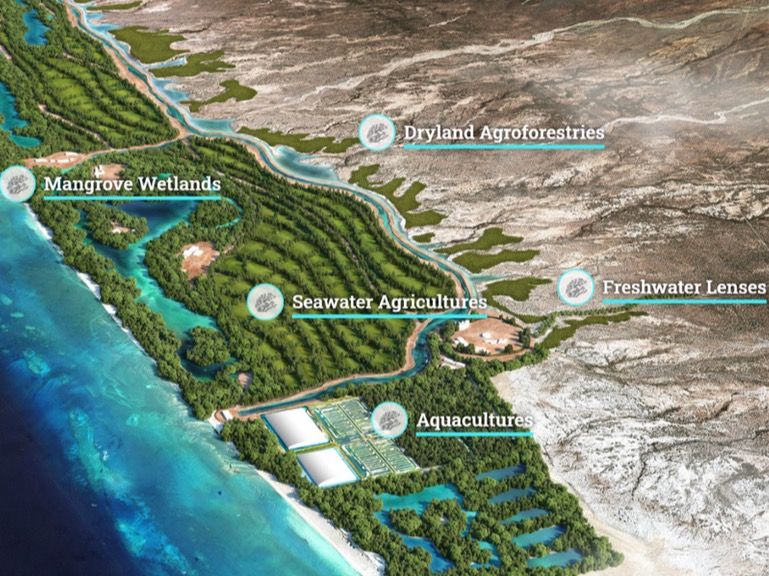
RRC designs and creates land restoration models in areas where natural resources have been seriously depleted. Their approach is driven by the climate, location, and needs of the context. Their projects require a substantial investment of resources and time—sometimes years—to understand the needs and cultural practices of the communities they work with, and their native flora and fauna. Often the people in the community have figured out the best answers to local environmental issues; what they lack are the resources and technical expertise to turn them into a reality. Current RRC projects around the globe include the restoration of mangrove wetlands, dryland agroforestry, seawater agriculture, and aquacultures.
Problem
Coastal and rural communities all over the world often survive on unsustainable practices that meet short-term needs but compromise long-term ecological health and economic stability. Land degradation is a result of these practices in the form of coastal erosion, fishery depletion, deforestation, soil loss, and fresh-water scarcity. These in turn exacerbate poverty - as resources are degraded poverty worsens, which makes short-term needs more acute - which leads to greater degradation. This is a vicious cycle in which ecological destruction and poverty reinforce each other. RRC reverses this destructive cycle by combining economic development with ecological restoration, creating livelihoods that reinforce ecological health through transformation of degraded landscapes into productive ecosystems.
Solution
RRC designs and creates land restoration models in areas where natural resources have been seriously depleted. Their approach is driven by the climate, location, and needs of the context. Their projects require a substantial investment of resources and time—sometimes years—to understand the needs and cultural practices of the communities they work with, and their native flora and fauna. Often the people in the community have figured out the best answers to local environmental issues; what they lack are the resources and technical expertise to turn them into a reality. Current RRC projects around the globe include the restoration of mangrove wetlands, dryland agroforestry, seawater agriculture, and aquacultures. In Songor, Ghana, RRC has leased a 2,500 hectare site for 90 years as part of a $50 million investment, where dryland agroforestry will be introduced. Dryland agroforestry is ideal for low rainfall areas, being able to survive up to two years without rain. It can also transform watersheds using nearby seawater systems. The project will generate some 3-3.5million tonnes in carbon credits, making the project carbon neutral.
Location
Industries
Involved organisation(s)
Key elements of the circular economy
Attachments and links
Contributors
Owner
Contributor
Date added: Oct 12, 2021
Last updated: Jul 11, 2022
More from the contributors

Add your content
Strengthen the circular economy knowledge base by adding a report, case study, publication, or other resource to our platform!